About 113 minutes
A-B-C of Gardening — Reading Notes
Gardening
25,972 recorded words. 2 minutes difference from this book's estimate.
View Gutenberg source #45946
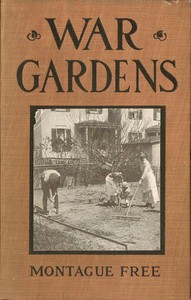
The source record for War Gardens: A Pocket Guide for Home Vegetable Growers — A Reader’s Guide measures this digital text at 25,457 words, 1 hr 51 min estimated reading time, and 4 detected text sections.
The text analysis averages about 20.5 words per sentence, while the detected sections provide another way to judge how the source is divided.
Project Gutenberg metadata also associates the work with “Vegetable gardening,” connecting these edition facts with the source record’s subject description.
Explore this collection
These alternatives are selected using recorded categories and estimated reading time.
About 113 minutes
Gardening
25,972 recorded words. 2 minutes difference from this book's estimate.
View Gutenberg source #45946About 113 minutes
Gardening
25,930 recorded words. 2 minutes difference from this book's estimate.
View Gutenberg source #46052About 124 minutes
Gardening
28,331 recorded words. 13 minutes difference from this book's estimate.
View Gutenberg source #21442Search stored excerpts and compare books → Choose by your preferences →
Choices use stored catalog measurements. Estimates vary with reading speed. A shared category is a catalog label, not a claim that two books have the same argument or literary quality.
Search reads excerpt text stored with this catalog and links to its associated Gutenberg record. The connection is stored in the site database; this tool does not recheck that every excerpt is word-for-word identical to that external record. Excerpt search does not cover every chapter and does not verify historical publication dates.
Catalog snapshot checked: 2026-09-25. Coverage: 91 public books, 91 available source excerpts.
Read the complete public-domain text at its original source.
Read on Project GutenbergMontague Free, head gardener at the Brooklyn Botanic Garden, wrote War Gardens in 1918 as a compact manual for civilians growing vegetables on back yards and vacant lots during World War I. The book’s preface declares it “essentially a practical book,” and that tone governs every page. Free does not theorize; he tells readers how to overcome “adverse conditions” by adapting crops to soil or modifying soil to suit crops. The guide’s structure—moving from site selection through fertilizers, planting, pest control, and storage—mirrors the seasonal rhythm of a gardener’s year. What distinguishes this work from a general gardening primer is its explicit wartime context: the National War Garden Commission’s estimate of $350 million in 1917 garden crops appears early, framing home food production as both a patriotic duty and a household economy measure.
Free writes in the first person plural, aligning himself with the reader: “We have the stuff and may as well eat it.” This colloquial directness appears throughout, as when he advises that fresh vegetables are “more appetizing than shop-worn products.” He avoids botanical jargon where possible, preferring plain instructions. For instance, when discussing clubroot in cabbage, he notes the first sign is “the sudden wilting of the plants”—a symptom any grower would recognize. His sentences are short, his paragraphs compact. The book’s 111-minute reading time reflects this efficiency. Free’s authority comes from experience, not abstraction: he mentions “the writer’s varied experience with back-yard and vacant-lot gardens” to ground his advice. This voice makes the guide feel like a conversation with a knowledgeable neighbor rather than a textbook.
The chapters on insect enemies and plant diseases reveal Free’s pragmatic approach. He recommends specific remedies: Bordeaux mixture for leaf-spot on beets, potassium sulphide for mildew on peas, and formalin to disinfect seed potatoes against scab. He warns that “infected seeds should never be planted” for bean anthracnose, and advises cutting off corn smut swellings “before they burst.” The tone is urgent but not alarmist. Free treats spraying as “a form of insurance” for potatoes, acknowledging that crops can be obtained without it. He also notes practical constraints: Bordeaux mixture “will not keep, but should be applied the same day,” while stock solutions of copper sulphate and lime “will keep indefinitely if they are not mixed together.” These details show a writer attuned to the realities of home gardeners who lack commercial facilities.
Free repeatedly ties gardening to larger wartime goals. Home vegetable raising “stimulates the consumption of vegetables, thus releasing staples, such as wheat and meat, for the use of our soldiers and the Allies.” He also emphasizes the reduction in the cost of living, noting that purchased vegetables are “quite a considerable item in the household budget.” Yet he does not ignore labor costs: “if labor is figured in the cost of raising vegetables,” the savings may be less. This balanced view keeps the guide credible. The book’s title—War Gardens—is not merely decorative; it signals that every chapter is shaped by the constraints of 1918: limited land, inexperienced gardeners, and the need for immediate results. Free’s advice on planning the garden, choosing crops, and storing harvests all serve the goal of maximum yield from minimum space.
Readers approaching War Gardens today will find a document of its era—a snapshot of how ordinary Americans were asked to contribute to the war effort through their own back yards. But the book also offers enduring practical wisdom: clear instructions on soil preparation, pest control, and crop rotation that remain sound. Free’s insistence on adapting to local conditions and his distrust of theory in favor of experience make this a useful companion for any gardener working with limited space. The guide rewards a slow reading, with attention to the small details—like the warning not to work among wet bean plants—that reveal a lifetime of observation.
That afternoon, rain drummed the windows as I followed Montague Free’s wartime rows, his coaxing of beans from stubborn clay. There was comfort in that urgency, a quiet patience I hadn’t expected. Afterwards, drifting through my shelves, I landed on Hardy Perennials and Old Fashioned Flowers Describing the Most Desirable Plants, for Borders, Rockeries, and Shrubberies. — Themes and Context, whose faded blooms felt like an echo of that same tender persistence.
Save your reaction, strongest insight, and memorable passage.