About 113 minutes
A-B-C of Gardening — Reading Notes
Gardening
25,972 recorded words. 0 minutes difference from this book's estimate.
View Gutenberg source #45946
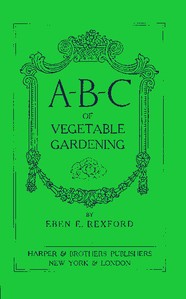
A-B-C of Vegetable Gardening — Key Ideas to Explore can be approached with a clearer sense of reading commitment from its source measurements: 25,930 words, 1 hr 53 min estimated reading time, and 3 detected text sections.
The text analysis averages about 23.1 words per sentence, while the detected sections provide another way to judge how the source is divided.
Project Gutenberg metadata also associates the work with “Vegetable gardening,” connecting these edition facts with the source record’s subject description.
Explore this collection
These alternatives are selected using recorded categories and estimated reading time.
About 113 minutes
Gardening
25,972 recorded words. 0 minutes difference from this book's estimate.
View Gutenberg source #45946About 111 minutes
Gardening
25,457 recorded words. 2 minutes difference from this book's estimate.
View Gutenberg source #63013About 124 minutes
Gardening
28,331 recorded words. 11 minutes difference from this book's estimate.
View Gutenberg source #21442Search stored excerpts and compare books → Choose by your preferences →
Choices use stored catalog measurements. Estimates vary with reading speed. A shared category is a catalog label, not a claim that two books have the same argument or literary quality.
Search reads excerpt text stored with this catalog and links to its associated Gutenberg record. The connection is stored in the site database; this tool does not recheck that every excerpt is word-for-word identical to that external record. Excerpt search does not cover every chapter and does not verify historical publication dates.
Catalog snapshot checked: 2026-09-25. Coverage: 91 public books, 91 available source excerpts.
Read the complete public-domain text at its original source.
Read on Project GutenbergRexford opens with a direct, reassuring address to the novice gardener, insisting that no special knack is required: “Any one who owns a bit of land, and has some time that can be given to garden-work, and an inclination to do so, can make a gardener of himself in a season.” This confident, conversational tone—marked by contractions like “don’t” and “can’t”—pervades the manual, making complex tasks like hotbed construction feel approachable. The author’s voice shifts subtly between sections: the Foreword is broadly encouraging, while later chapters adopt a more instructional, step-by-step rhythm, especially when detailing fermentation layers or mulching techniques.
Rexford’s Foreword directly tackles two common excuses for not gardening: lack of experience and insufficient land. He counters the first by asserting that practical knowledge comes quickly—“After the first season he will not be likely to ask or need advice”—and the second by citing a friend who grows enough for a family of four on a plot only twenty-five feet square. This anecdote grounds his advice in a specific, believable example rather than abstract praise. The language is plain and motivational, using phrases like “pleasure and profit” and “green things growing” to frame gardening as both rewarding and feasible. Notably, he avoids technical jargon early on, saving terms like “intensive cultivation” for later chapters, which suggests a deliberate scaffolding of complexity.
Chapter IX demystifies the hotbed, which Rexford acknowledges many beginners find “mysterious.” He breaks it down into simple components: a frame, glass, and fermenting manure to generate heat. The instructions are precise: spread manure in layers four to five inches deep, tramp each down, cover with a rain-shedding material, and wait for “a warm moisture” to rise like steam. This sensory detail—the visible steam—helps the reader visualize the process. Rexford’s tone remains patient, even when correcting misconceptions: “Now there is nothing simpler than a hotbed when you come to a study of it.” The chapter also introduces cold-frames as a less intensive alternative, maintaining the book’s pattern of offering multiple methods for different skill levels.
In the section on small fruits, Rexford shifts to a more advisory voice, cautioning that apple, plum, pear, and cherry culture is “quite distinct” from the home vegetable gardening he focuses on. He briefly urges readers to grow these fruits when conditions allow, then returns to practical details for currants, gooseberries, raspberries, and strawberries. A key passage describes “heeling-in”—burying roots in a dry spot over winter—with specific instructions to use tarred paper weighted down by stones. The language is economical: “Care should be taken to keep the plants well protected from storms.” This blend of general encouragement and concrete technique characterizes the entire manual, making it a useful reference for the self-taught gardener.
Rexford’s manual rewards readers who move from front to back: early chapters build confidence, while later ones deliver the nitty-gritty of hotbeds, mulching, and winter storage. The author’s voice remains steady throughout—neither overly technical nor condescending. For the best experience, read the Foreword first to absorb his philosophy, then jump to the chapter that matches your current garden challenge. The index and clear chapter headings make it easy to return to specific tasks as the season progresses.
There’s something so earnest in Rexford’s 1916 advice—he genuinely believed a small patch of ground could feed a family’s pride. Reading it, I thought of the Hidatsa farmers who tended their crops with a different kind of knowing, one passed down through hands, not pages. That quiet authority lingers here: Agriculture of the Hidatsa Indians: An Indian Interpretation — A Reader’s Guide. Both feel like letters from a slower, more patient earth.
Your answers remain private and are stored only in this browser.