About 139 minutes
The Book of Old-Fashioned Flowers And Other Plants Which Thrive in the Open-Air of England — Edition Insights
Gardening
31,782 recorded words. 0 minutes difference from this book's estimate.
View Gutenberg source #48740
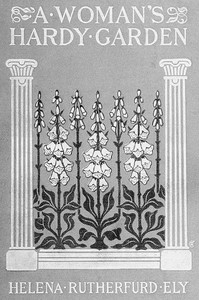
The source record for A woman's hardy garden — Reading Notes measures this digital text at 31,788 words, 2 hr 19 min estimated reading time, and 6 detected text sections.
The text analysis averages about 19.2 words per sentence, while the detected sections provide another way to judge how the source is divided.
Project Gutenberg metadata also associates the work with “Landscape gardening,” connecting these edition facts with the source record’s subject description.
Explore this collection
These alternatives are selected using recorded categories and estimated reading time.
About 139 minutes
Gardening
31,782 recorded words. 0 minutes difference from this book's estimate.
View Gutenberg source #48740About 138 minutes
Gardening
31,577 recorded words. 1 minutes difference from this book's estimate.
View Gutenberg source #74972About 145 minutes
Gardening
33,210 recorded words. 6 minutes difference from this book's estimate.
View Gutenberg source #71972Search stored excerpts and compare books → Choose by your preferences →
Choices use stored catalog measurements. Estimates vary with reading speed. A shared category is a catalog label, not a claim that two books have the same argument or literary quality.
Search reads excerpt text stored with this catalog and links to its associated Gutenberg record. The connection is stored in the site database; this tool does not recheck that every excerpt is word-for-word identical to that external record. Excerpt search does not cover every chapter and does not verify historical publication dates.
Catalog snapshot checked: 2026-09-25. Coverage: 91 public books, 91 available source excerpts.
Read the complete public-domain text at its original source.
Read on Project GutenbergHelena Rutherfurd Ely addresses her reader as a fellow gardener with limited time and resources, not as a botanical expert. Her preface states the book is “only meant to tell briefly of a few shrubs, hardy perennials, biennials and annuals of simple culture.” The tone is direct and personal, rooted in the author’s own garden at Meadowburn Farm. Photographs by Professor C. F. Chandler document specific plants and garden views, reinforcing the practical, evidence-based approach. Ely’s voice is that of a seasoned practitioner who has tested what she recommends.
Ely organizes her advice around the flowering calendar, giving precise dates for each plant’s performance. For example, she notes that Aquilegia blooms from “tenth of May to first week in June,” while Phlox flowers from “early July until killed by frost.” This attention to timing is not merely descriptive; it shapes her planting strategies. She advises cutting down Rudbeckia tops after blooming to encourage a second crop in October. The book’s list of hardy perennials includes height, colour, and blooming period for each species, making it a reference tool for planning continuous colour. Ely’s calendar is built from direct observation, not from generic horticultural tables.
Ely’s practical instructions reveal a hands-on approach to garden maintenance. She warns that Rudbeckia “must be staked, or when heavy with blossoms they will blow down.” For Phlox, she recommends cutting off finished flower heads to extend bloom until frost. Her method for biennials like Foxgloves and Canterbury Bells involves sowing in early April, transplanting in July to follow early vegetables, and using a layer of manure in trenches. These details show a gardener who manages space and labour efficiently, treating the vegetable garden as a nursery for ornamental plants. The emphasis on second crops and division every other year reflects a frugal, productive mindset.
The book’s illustrations, taken by Professor C. F. Chandler in Ely’s own garden, serve as visual evidence of her methods. Captions include specific dates—such as “September twenty-ninth” for garden gate with gourds and “June sixth” for a clump of Valerian—linking the photographs to the seasonal advice in the text. These images are not decorative; they document actual plant growth, garden structures like the rose arch, and the effects of her cultivation techniques. The frontispiece, a water-colour sketch by George B. Bartholomew, contrasts with Chandler’s photographs, but both reinforce the book’s claim to be grounded in a real, working garden.
Ely’s book is best read as a companion for the working gardener, not a theoretical treatise. Her advice is specific enough to follow directly: she tells you when to sow, how deep to trench, and which plants need staking. The photographs offer a rare glimpse into an early twentieth-century American garden. Readers will find most value by taking Ely’s calendar and lists to their own plots, testing her observations against local conditions.
Helena Rutherfurd Ely’s A Woman’s Hardy Garden always felt like a quiet friend who knew the exact week the phlox would bloom. Her patient notes on staking and soil carry a tenderness I often recall when opening The book of garden design — Edition Insights. They share a gentle reverence for place, for the slow shaping of gladness in open ground.
Answer a few questions and save a private reflection on this device.