1

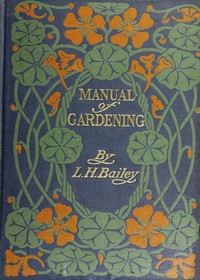
Manual of Gardening (Second Edition) A Practical Guide to the Making of Home Grounds and the Growing of Flowers, Fruits, and Vegetables for Home Use — Background and Themes
(6 User reviews)
1069
Project Gutenberg
2005
Not confirmed
Gardening
Readers of public-domain and historical texts
Project Gutenberg digital edition
en
Edition facts
Words
158,709
Reading time
691 min
Text sections
25
The catalog record for Manual of Gardening (Second Edition) A Practical Guide to the Making of Home Grounds and the Growing of Flowers, Fruits, and Vegetables for Home Use — Background and Themes provides practical reading context through 158,709 words, 11 hr 31 min estimated reading time, and 25 detected text sections.
The text analysis averages about 16.0 words per sentence, while the detected sections provide another way to judge how the source is divided.
Project Gutenberg metadata also associates the work with “Gardening,” connecting these edition facts with the source record’s subject description.
Source:
Project Gutenberg record #9550
This editorial note examines L. H. Bailey's 1910 gardening manual, focusing on how its catalog subject 'Gardening' underrepresents the book's detailed landscape design philosophy, practical construction advice, and specific plant recommendations drawn from the excerpts.
Editorial Edition Score
4.9/5
★★★★★
★★★★★
Calculated from edition completeness, EPUB availability, text structure and catalogue metadata. Not a user rating.
How this score is calculated
- Description quality20 pts
- Title & short description10 pts
- Source metadata20 pts
- Text length15 pts
- Chapters / structure15 pts
- EPUB file integrity20 pts
Total of 100 points, scaled to a 2.5-5.0 range. Editions with an empty description or a missing EPUB file are not scored.
Edition quality
Read the Text
CHAPTER I. THE POINT OF VIEW
CHAPTER II. THE GENERAL PLAN OR THEORY OF THE PLACE
_The plan of the grounds_
_The picture in the landscape_
_The planting is part of the design or picture_
_The flower-growing should be part of the design_
Defects in flower-growing
The old-fashioned garden
Contents of the flower-borders
_The value of plants may lie in foliage and form rather than in bloom_
_Various specific examples_
CHAPTER III. EXECUTION OF SOME OF THE LANDSCAPE FEATURES
The question of drainage, curbing, and gutters
When and how to sow the seed
A combination of sodding and seeding
CHAPTER IV. THE HANDLING OF THE LAND
_The draining of the land_
_Trenching and subsoiling_
_Preparation of the surface_
_The saving of moisture_
_Hand tools for weeding and subsequent tillage and other hand work_
Trowels and their kind
CHAPTER V. THE HANDLING OF THE PLANTS
_Propagating by cuttings_
Dormant stem-cuttings
_Transplanting young seedlings_
_Transplanting established plants and trees_
Making the rows straight
Cutting-back; filling
Removing very large trees
_Winter protection of plants_
_Tree surgery and protection_
Repairing street trees
_The grafting of plants_
_Keeping records of the plantation_
_The storing of fruits and vegetables_
_The forcing of plants_
Management of hotbeds
CHAPTER VI. PROTECTING PLANTS FROM THINGS THAT PREY ON THEM
_Soaking tubers and seeds_
_Insecticide spraying formulas_
_Fungicide spraying formulas_
_Treatment for some of the common insects_
_Treatment for some of the common plant diseases_
CHAPTER VII. THE GROWING OF THE ORNAMENTAL PLANTS—THE CLASSES OF PLANTS, AND LISTS
_Planting for immediate effect_
_The use of “foliage” trees and shrubs_
_Windbreaks and screens_
_The making of hedges_
Plants for subtropical effects
_Aquatic and bog plants_
_Rockeries and alpine plants_
1. PLANTS FOR CARPET-BEDS
_Lists for carpet-beds_
_List of annuals by color of flowers_
_Useful annuals for edgings of beds and walks, and for ribbon-beds_
_Annuals that continue to bloom after frost_
_List of annuals suitable for bedding_ (_that is, for “mass-effects” of color_)
_List of annuals by height_
_Distances for planting annuals_
3. HARDY HERBACEOUS PERENNIALS
_Perennial herbs suitable for lawn and “planting” effects_
_A brief seasonal flower-garden or border list of herbaceous perennials_
_One hundred extra-hardy perennial herbs_
_List of outdoor fall-planted bulbs for the North_
_List of shrubbery plants for the North_
_Shrubs for the South_
_Annual herbaceous climbers_
_Perennial herbaceous climbers_
_Woody perennial climbers_
7. TREES FOR LAWNS AND STREETS
_List of hardy deciduous trees for the North_
_Non-coniferous trees for the South_
8. CONIFEROUS EVERGREEN SHRUBS AND TREES
_List of shrubby conifers_
_Conifers for the South_
_The window-box for outside effect_
_The inside window-garden, or “house plants”_
_Bulbs in the window-garden_
_Watering house plants_
CHAPTER VIII. THE GROWING OF THE ORNAMENTAL PLANTS—INSTRUCTIONS OF PARTICULAR KINDS
Abutilons; agapanthus; alstremeria; amaryllis; anemone; aralia; araucaria; auricula; azaleas; begonias; cactus; caladium; calceolaria; calla; camellias; cannas; carnations; century plants; chrysanthemums; cineraria; clematis; coleus; crocus; croton; cyclamen; dahlia; ferns; freesia; fuchsia; geranium; gladiolus; gloxinia; grevillea; hollyhocks; hyacinths; iris; lily; lily-of-the-valley; mignonette; moon-flowers; narcissus; oleander; oxalis; palms; pandanus; pansy; pelargonium; peony; phlox; primulas; rhododendrons; rose; smilax; stocks; sweet pea; swainsona; tuberose; tulips; violet; wax plant.
CHAPTER IX. THE GROWING OF THE FRUIT PLANTS
_Age and size of trees_
_Washing and scrubbing the trees_
_Gathering and keeping fruit_
Almond; apples; apricot; blackberry; cherry; cranberry; currant; dewberry; fig; gooseberry; grape; mulberry; nuts; orange; peach; pear; plum; quince; raspberry; strawberry;
CHAPTER X. THE GROWING OF THE VEGETABLE PLANTS
_The classes of vegetables_
_The culture of the leading vegetables_
Asparagus; artichoke; artichoke; Jerusalem; bean; beet; broccoli; brussels sprouts; cabbage; carrot; cauliflower; celeriac; celery; chard; chicory; chervil; chives; collards; corn salad; corn; cress; cucumber; dandelion; egg-plant; endive; garlic; horseradish; kale; kohlrabi; leek; lettuce; mushroom; mustard; muskmelon; okra; onion; parsley; parsnip; pea; pepper; potato; radish; rhubarb; salsify; sea-kale; sorrel; spearmint; spinach; squash; sweet-potato; tomato; turnips and rutabagas; watermelon.
CHAPTER XI. SEASONAL REMINDERS
PLATE I. The open center.
PLATE II. The plan of the place.
PLATE III. Open-center treatment in a semi-tropical country.
PLATE IV. Subtropical bedding against a building. Caladiums, cannas, abutilons, permanent rhododendrons, and other large stuff, with tuberous begonias and balsams between.
PLATE V. A subtropical bed. Center of cannas, with border of _Pennisetum longistylum_ (a grass) started in late February or early March.
PLATE VI. A tree that gives character to a place.
PLATE VII. Bedding with palms. If a bricked-up pit is made about the porch, pot palms may be plunged in it in spring and tub conifers in winter; and fall bulbs in tin cans (so that the receptacles will not split with frost) may be plunged among the evergreens.
PLATE VIII. A well-planted entrance. Common trees and bushes, with Boston ivy. on the post, and _Berberis Thunbergii_ in front.
PLATE IX. A rocky bank covered with permanent informal planting.
PLATE X. A shallow lawn pond, containing water-lilies, variegated sweet flag, iris, and subtropical bedding at the rear; fountain covered with parrot’s feather (_Myriophyllum proserpinacoides_).
PLATE XI. A back yard with summer house, and gardens beyond.
PLATE XII. A back yard with heavy flower-garden planting.
PLATE XIII. The pageant of summer. Gardens of C.W. Dowdeswell, England, from a painting by Miss Parsons.
PLATE XIV. Virginia creeper screen, on an old fence, with wall-flowers and hollyhocks in front.
PLATE XV. Scuppernong grape, the arbor vine of the South. This plate shows the noted scuppernongs on Roanoke Island, of which the origin is unknown, but which were of great size more than one hundred years ago.
PLATE XVI. A flower-garden of China asters, with border of one of the dusty millers (_Centaurea_).
PLATE XVII. The peony. One of the most steadfast of garden flowers.
PLATE XVIII. Cornflower or bachelor’s button. _Centaurea Cyanus_.
PLATE XIX. Pyracantha in fruit. One of the best ornamental-fruited plants for the middle and milder latitudes.
PLATE XX. A simple but effective window-box, containing geraniums, petunias, verbenas, heliotrope, and vines.
PLATE XXI. The king of fruits. Newtown as grown in the Pacific country.
PLATE XXII. Wall-training of a pear tree.
PLATE XXIII. Cherry currant.
PLATE XXIV. Golden Bantam sweet corn.
PLATE XXV. The garden radish, grown in fall, of the usual spring sorts.
It has been my desire to reconstruct the two books, “Garden-Making” and “Practical Garden-Book”; but inasmuch as these books have found a constituency in their present form, it has seemed best to let them stand as they are and to continue their publication as long as the demand maintains itself, and to prepare a new work on gardening. This new work I now offer as “A Manual of Gardening.” It is a combination and revision of the main parts of the other two books, together with much new material and the results of the experience of ten added years.
A book of this kind cannot be drawn wholly from one’s own practice, unless it is designed to have a very restricted and local application. Many of the best suggestions in such a book will have come from correspondents, questioners, and those who enjoy talking about gardens; and my situation has been such that these communications have come to me freely. I have always tried, however, to test all such suggestions by experience and to make them my own before offering them to my reader. I must express my special obligation to those persons who collaborated in the preparation of the other two books, and whose contributions have been freely used in this one: to C.E. Hunn, a gardener of long experience; Professor Ernest Walker, reared as a commercial florist; Professor L.R. Taft and Professor F.A. Waugh, well known for their studies and writings in horticultural subjects.
In making this book, I have had constantly in mind the home-maker himself or herself rather than the professional gardener. It is of the greatest importance that we attach many persons to the land; and I am convinced that an interest in gardening will naturally take the place of many desires that are much more difficult to gratify, and that lie beyond the reach of the average man or woman.
It has been my good fortune to have seen amateur and commercial gardening in all parts of the United States, and I have tried to express something of this generality in the book; yet my experience, as well as that of my original collaborators, is of the northeastern states, and the book is therefore necessarily written from this region as a base. One gardening book cannot be made to apply in its practice in all parts of the United States and Canada unless its instructions are so general as to be practically useless; but the principles and points of view may have wider application. While I have tried to give only the soundest and most tested advice, I cannot hope to have escaped errors and shortcomings, and I shall be grateful to my reader if he will advise me of mistakes or faults that he may discover. I shall expect to use such information in the making of subsequent editions.
Of course an author cannot hold himself responsible for failures that his reader may suffer. The statements in a book of this kind are in the nature of advice, and it may or it may not apply in particular conditions, and the success or failure is the result mostly of the judgment and carefulness of the operator. I hope that no reader of a gardening book will ever conceive the idea that reading a book and following it literally will make him a gardener. He must always assume his own risks, and this will be the first step in his personal progress.
I should explain that the botanical nomenclature of this book is that of the “Cyclopedia of American Horticulture,” unless otherwise stated. The exceptions are the “trade names,” or those used by nurserymen and seedsmen in the sale of their stock.
I should further explain the reason for omitting ligatures and using such words as peony, spirea, dracena, cobea. As technical Latin formularies, the compounds must of course be retained, as in _Pæonia officinalis_, _Spiræa Thunbergi_, _Dracæna fragrans_, _Cobœa scandens_; but as Anglicized words of common speech it is time to follow the custom of general literature, in which the combinations æ and œ have disappeared. This simplification was begun in the “Cyclopedia of American Horticulture” and has been continued in other writings.
ITHACA, NEW YORK, January 20, 1910.
CHAPTER I THE POINT OF VIEW
I. The open center. I. The open center.
Wherever there is soil, plants grow and produce their kind, and all plants are interesting; when a person makes a choice as to what plants he shall grow in any given place, he becomes a gardener or a farmer; and if the conditions are such that he cannot make a choice, he may adopt the plants that grow there by nature, and by making the most of them may still be a gardener or a farmer in some degree.
Every family, therefore, may have a garden. If there is not a foot of land, there are porches or windows. Wherever there is sunlight, plants may be made to grow; and one plant in a tin-can may be a more helpful and inspiring garden to some mind than a whole acre of lawn and flowers may be to another.
The satisfaction of a garden does not depend on the area, nor, happily, on the cost or rarity of the plants. It depends on the temper of the person. One must first seek to love plants and nature, and then to cultivate the happy peace of mind that is satisfied with little.
In the vast majority of cases a person will be happier if he has no rigid and arbitrary notions, for gardens are moodish, particularly with the novice. If plants grow and thrive, he should be happy; and if the plants that thrive chance not to be the ones that he planted, they are plants nevertheless, and nature is satisfied with them.
We are wont to covet the things that we cannot have; but we are happier when we love the things that grow because they must. A patch of lusty pigweeds, growing and crowding in luxuriant abandon, may be a better and more worthy object of affection than a bed of coleuses in which every spark of life and spirit and individuality has been sheared out and suppressed. The man who worries morning and night about the dandelions in the lawn will find great relief in loving the dandelions. Each blossom is worth more than a gold coin, as it shines in the exuberant sunlight of the growing spring, and attracts the insects to its bosom. Little children like the dandelions: why may not we? Love the things nearest at hand; and love intensely. If I were to write a motto over the gate of a garden, I should choose the remark that Socrates is said to have made as he saw the luxuries in the market, “How much there is in the world that I do not want!”
I verily believe that this paragraph I have just written is worth more than all the advice with which I intend to cram the succeeding pages, notwithstanding the fact that I have most assiduously extracted this advice from various worthy but, happily, long-forgotten authors. Happiness is a quality of a person, not of a plant or a garden; and the anticipation of joy in the writing of a book may be the reason why so many books on garden-making have been written. Of course, all these books have been good and useful. It would be ungrateful, at the least, for the present writer to say otherwise; but books grow old, and the advice becomes too familiar. The sentences need to be transposed and the order of the chapters varied, now and then, or interest lags. Or, to speak plainly, a new book of advice on handicraft is needed in every decade, or perhaps oftener in these days of many publishers. There has been a long and worthy procession of these handbooks,—Gardiner & Hepburn, M’Mahon, Cobbett—original, pungent, versatile Cobbett!—Fessenden, Squibb, Bridgeman, Sayers, Buist, and a dozen more, each one a little richer because the others had been written. But even the fact that all books pass into oblivion does not deter another hand from making still another venture.
I expect, then, that every person who reads this book will make a garden, or will try to make one; but if only tares grow where roses are desired, I must remind the reader that at the outset I advised pigweeds. The book, therefore, will suit everybody,—the experienced gardener, because it will be a repetition of what he already knows; and the novice, because it will apply as well to a garden of burdocks as of onions.
A garden is the personal part of an estate, the area that is most intimately associated with the private life of the home. Originally, the garden was the area inside the inclosure or lines of fortification, in distinction from the unprotected area or fields that lay beyond; and this latter area was the particular domain of agriculture. This book understands the garden to be that part of the personal or home premises devoted to ornament, and to the growing of vegetables and fruits. The garden, therefore, is an ill-defined demesne; but the reader must not make the mistake of defining it by dimensions, for one may have a garden in a flower-pot or on a thousand acres. In other words, this book declares that every bit of land that is not used for buildings, walks, drives, and fences, should be planted. What we shall plant—whether sward, lilacs, thistles, cabbages, pears, chrysanthemums, or tomatoes—we shall talk about as we proceed.
The only way to keep land perfectly unproductive is to keep it moving. The moment the owner lets it alone, the planting has begun. In my own garden, this first planting is of pigweeds. These may be followed, the next year, by ragweeds, then by docks and thistles, with here and there a start of clover and grass; and it all ends in June-grass and dandelions.
Nature does not allow the land to remain bare and idle. Even the banks where plaster and lath were dumped two or three years ago are now luxuriant with burdocks and sweet clover; and yet persons who pass those dumps every day say that they can grow nothing in their own yard because the soil is so poor! Yet I venture that those same persons furnish most of the pigweed seed that I use on my garden.
The lesson is that there is no soil—where a house would be built—so poor that something worth while cannot be grown on it. If burdocks will grow, something else will grow; or if nothing else will grow, then I prefer burdocks to sand and rubbish.
The burdock is one of the most striking and decorative of plants, and a good piece of it against a building or on a rough bank is just as useful as many plants that cost money and are difficult to grow. I had a good clump of burdock under my study window, and it was a great comfort; but the man would persist in wanting to cut it down when he mowed the lawn. When I remonstrated, he declared that it was nothing but burdock; but I insisted that, so far from being burdock, it was really Lappa major, since which time the plant and its offspring have enjoyed his utmost respect. And I find that most of my friends reserve their appreciation of a plant until they have learned its name and its family connections.
The dump-place that I mentioned has a surface area of nearly one hundred and fifty square feet, and I find that it has grown over two hundred good plants of one kind or another this year. This is more than my gardener accomplished on an equal area, with manure and water and a man to help. The difference was that the plants on the dump wanted to grow, and the imported plants in the garden did not want to grow. It was the difference between a willing horse and a balky horse. If a person wants to show his skill, he may choose the balky plant; but if he wants fun and comfort in gardening, he would better choose the willing one.
I have never been able to find out when the burdocks and mustard were planted on the dump; and I am sure that they were never hoed or watered. Nature practices a wonderfully rigid economy. For nearly half the summer she even refused rain to the plants, but still they thrived; yet I staid home from a vacation one summer that I might keep my plants from dying. I have since learned that if the plants in my hardy borders cannot take care of themselves for a time, they are little comfort to me.
The joy of garden-making lies in the mental attitude and in the sentiments.
CHAPTER II THE GENERAL PLAN OR THEORY OF THE PLACE
Having now discussed the most essential elements of gardening, we may give attention to such minor features as the actual way in which a satisfying garden is to be planned and executed.
Speaking broadly, a person will get from a garden what he puts into it; and it is of the first importance, therefore, that a clear conception of the work be formulated at the outset. I do not mean to say that the garden will always turn out what it was desired that it should be; but the failure to turn out properly is usually some fault in the first plan or some neglect in execution.
Sometimes the disappointment in an ornamental garden is a result of confusion of ideas as to what a garden is for. One of my friends was greatly disappointed on returning to his garden early in September to find that it was not so full and floriferous as when he left it in July. He had not learned the simple lesson that even a flower-garden should exhibit the natural progress of the season. If the garden begins to show ragged places and to decline in late August or early September, it is what occurs in all surrounding vegetation. The year is maturing. The garden ought to express the feeling of the different months. The failing leaves and expended plants are therefore to be looked on, to some extent at least, as the natural order and destiny of a good garden.
L. H. Bailey's Manual of Gardening (Second Edition) opens not with soil preparation but with a chapter titled 'The Point of View,' asserting that a garden is fundamentally a picture in the landscape. The catalog subject 'Gardening' suggests a broad how-to, but the excerpts reveal a work equally concerned with design theory, grading, and the interplay of plant forms. Bailey devotes substantial space to the 'general plan or theory of the place,' discussing birds, cats, and the defects of lawn flower-beds before addressing any single plant. This editorial note explores how the manual's practical instructions are embedded within a coherent aesthetic framework, and how the catalog subject alone fails to capture its dual nature as both a design treatise and a grower's handbook.
Landscape as Picture, Not Plot
The excerpts show Bailey insisting that 'the planting is part of the design or picture.' He warns against 'defects in flower-growing' and advocates for flower-borders and old-fashioned gardens as deliberate compositions. The table of contents lists chapters on grading, terraces, walks, and bounding lines before any mention of seeds or soil. This ordering suggests that Bailey considered the physical shaping of the ground—the 'execution of landscape features'—as foundational. The catalog subject 'Gardening' implies a focus on plants, but the manual treats the land itself as the primary medium. Bailey's discussion of 'the picture in the landscape' and his examples of 'a small back yard' and 'a city lot' indicate that his advice is meant for homeowners shaping a coherent outdoor room, not merely for growers maximizing yield.
Vines: A Case Study in Practical Aesthetics
In the section on ornamental plants, Bailey devotes several paragraphs to vines, offering a detailed list of species for screens, walls, and ground covers. He distinguishes between 'tender vines' like nasturtiums and 'hardy vines' like Virginia creeper, and notes that 'high climbing in annual plants may be at the expense of bloom.' This observation ties practical growth habits to visual effect. He recommends the Japan ampelopsis for its brilliant fall color and the actinidia for its 'large thick glossy leaves, not affected by insects.' The inclusion of native vines—even poison ivy, which he says 'cannot be recommended' for cultivation—shows a botanist's eye for utility and risk. The catalog subject 'Gardening' does not hint at this level of species-specific guidance, nor at Bailey's willingness to discuss wild plants as worthy of consideration.
The Manual's Structure: Theory Before Technique
The table of contents reveals a deliberate sequence: 'The Point of View,' then 'The General Plan,' then 'Execution of Landscape Features,' and only later 'The Handling of the Land' and 'The Handling of the Plants.' This ordering implies that Bailey expected readers to conceive a design before digging. The excerpts confirm that he provides both philosophical justification and step-by-step instructions—for example, how to 'make the rows straight' and how to 'secure a firm sod.' Yet the catalog subject 'Gardening' collapses this layered approach into a single category. The manual's second edition (1910) updates earlier advice, but the excerpts do not indicate what changed. Readers should note that the book's organization itself argues for a methodical, design-first approach to home grounds, a nuance the catalog cannot convey.
Bailey's manual rewards readers who approach it as both a reference and a statement of principles. The catalog subject 'Gardening' is accurate but thin; the excerpts show a work that blends aesthetic theory with practical botany. Readers interested in the history of landscape design or in early twentieth-century horticultural writing will find the manual's structure and voice as instructive as its plant lists. The second edition's date—1910—places it at a moment when American suburban gardening was expanding, and Bailey's emphasis on 'home grounds' rather than commercial production reflects that context. Approach the text as a period document that argues for thoughtful, designed gardening, not merely a collection of tips.
There’s something tender about Bailey’s insistence that a garden begins with a plan, not a seed. When I read his careful notes on paths and hedges, I think of older books on my shelf, particularly The Culture of Vegetables and Flowers From Seeds and Roots 16th Edition — Edition Insights, which feels like a quiet conversation with the same patient earth. Both speak of hope measured in seasons.
There are no comments for this eBook.
Reader reflection
What did you think of this book?
Answer a few questions and save a private reflection on this device.
Your progress
0
/
10
2
Did this book hold your interest?
3
Would you encourage someone else to read it?
4
How much effort did this book require?
5
Could you apply anything you learned?
6
Would a second reading be valuable?
7
How personally connected did you feel to the book?
8
Did the book deliver what you hoped for?
9
In one sentence, what did you learn?
10





Camila Gonzalez
1 month ago