About 290 minutes
Organic Gardener's Composting — Reading Companion
Plants Soil
66,542 recorded words. 38 minutes difference from this book's estimate.
View Gutenberg source #4342
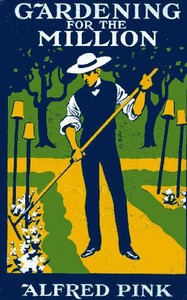
Gardening for the Million — Edition Insights can be approached with a clearer sense of reading commitment from its source measurements: 75,356 words, 5 hr 28 min estimated reading time, and 8 detected text sections.
The text analysis averages about 12.2 words per sentence, while the detected sections provide another way to judge how the source is divided.
Project Gutenberg metadata also associates the work with “Gardening,” connecting these edition facts with the source record’s subject description.
Explore this collection
These alternatives are selected using recorded categories and estimated reading time.
About 290 minutes
Plants Soil
66,542 recorded words. 38 minutes difference from this book's estimate.
View Gutenberg source #4342About 267 minutes
Plants Soil
61,404 recorded words. 61 minutes difference from this book's estimate.
View Gutenberg source #7123About 245 minutes
Plants Soil
56,197 recorded words. 83 minutes difference from this book's estimate.
View Gutenberg source #23682Search stored excerpts and compare books → Choose by your preferences →
Choices use stored catalog measurements. Estimates vary with reading speed. A shared category is a catalog label, not a claim that two books have the same argument or literary quality.
Search reads excerpt text stored with this catalog and links to its associated Gutenberg record. The connection is stored in the site database; this tool does not recheck that every excerpt is word-for-word identical to that external record. Excerpt search does not cover every chapter and does not verify historical publication dates.
Catalog snapshot checked: 2026-09-25. Coverage: 91 public books, 91 available source excerpts.
Read the complete public-domain text at its original source.
Read on Project GutenbergAlfred Pink's Gardening for the Million (1901) is structured as an alphabetical encyclopedia of plants, from Aaron's Rod to Hyacinthus. Each entry follows a tight formula: a brief description, soil preference, propagation method, flowering time, and height. This repetitive structure, rather than narrative flow, defines the reading experience. The work's title signals its intended audience—amateur gardeners—and its preface confirms the aim to stimulate cultivation without repeating seed-sowing times for every plant. Instead, Pink directs readers to general sections on annuals, biennials, and perennials, creating a layered reference system.
The book's backbone is its alphabetical sequence of plant entries, each a self-contained block of information. For example, the entry for Abies (Spruce Firs) lists varieties such as Ajanensis, with its “dual-coloured leaves—dark green on the upper surface and silvery white underneath,” and notes that any may be increased by cuttings. The entry for Hyacinthus (Muscari) similarly details planting depth (4 in. deep and 6 in. apart) and soil preference (sandy). This uniformity allows quick scanning but also reveals Pink's method: he prioritizes practical details over botanical theory. The entries rarely exceed a few sentences, and each ends with a height range, creating a predictable rhythm. Cross-references, such as “Iberis. — See 'Candytuft,'” further streamline navigation, though they assume the reader knows the common name.
Across entries, Pink repeatedly emphasizes soil type and propagation method. For Abronia, he specifies “sandy peat” and “root division”; for Abutilon, “rich sandy loam” and cuttings “in sand under glass.” The phrase “any ordinary soil” appears for Abelia, while Acacia requires “rich sandy loam.” This repetition underscores the author's assumption that soil is the primary variable a gardener can control. Propagation instructions are similarly formulaic: “increased by cuttings,” “raised from seed,” or “by dividing the roots.” For Hydrangea, Pink adds a seasonal note: “cut back when they have done flowering, and protected from frost.” These recurring elements build a consistent voice—direct, economical, and focused on actionable steps.
Pink often shifts from general statements to precise, almost fussy details. In the hyacinth entry, he advises placing bulbs in glasses of water “so that the bulbs just escape touching it,” adding a piece of charcoal, and changing water “when it becomes offensive.” He specifies that the temperature of new water should not be below that poured away. This level of detail contrasts with the broader advice for Hypericum: “Any soil suits the hardy kinds, but they prefer shade and moisture.” The movement between general and specific creates a layered text: a reader can follow the basic rule or attend to the finer points. The preface acknowledges this by directing readers to separate sections for seed-sowing times, implying that the alphabetical entries are meant to be supplemented, not exhaustive.
Nearly every entry concludes with a flowering month and a height range, anchoring the plant in a seasonal and spatial framework. Abronia flowers in April and reaches 4 to 6 inches; Abutilon reaches 5 to 8 feet; Acæna varies from 3 inches to 2 feet. These metrics allow the gardener to plan for succession and scale. For bulbs like Hyacinthus, Pink adds planting windows: “September is a good time to start the growth” for indoor glasses, and “October till frost sets in” for outdoor beds. The consistency of these data points suggests Pink expected readers to compare entries and make selections based on timing and size. The work thus functions as a decision-support tool, not merely a catalogue.
Pink's manual rewards a nonlinear reading: dip into any entry for a self-contained tip, or cross-reference by soil type or flowering season. The repetitive structure, far from being a flaw, trains the eye to find key facts quickly. Readers may note that the author's voice is most vivid in the rare exceptions—a caution about water temperature, a note on fragrance—which break the formula. This edition preserves the original's typographic simplicity, letting the plant names and numbers speak.
There is a humbling rhythm in Pink's alphabetical rows—each plant settled into its brief, perfect slot, one after another, like years themselves. My fingers have worn these pages thin. It reminds me of a quieter summer spent watching things grow slowly, the kind of unhurried patience captured elsewhere. Some volumes talk; these two simply keep company, side by side on the shelf. My Summer in a Garden — Story, Setting & Ideas whispers back, and I smile at their shared fondness for ordinary days.
Your answers remain private and are stored only in this browser.