About 119 minutes
Our Farm of Four Acres and the Money We Made by It — A Reader’s Guide
Farming
27,287 recorded words. 64 minutes difference from this book's estimate.
View Gutenberg source #11555
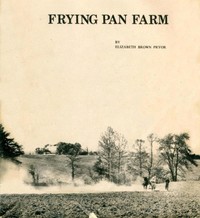
Before opening Frying Pan Farm — Background and Themes, the edition data offers a quick orientation: 41,924 words, 3 hr 3 min estimated reading time, and 8 detected text sections.
The text analysis averages about 17.4 words per sentence, while the detected sections provide another way to judge how the source is divided.
Project Gutenberg metadata also associates the work with “Agriculture -- Virginia -- Fairfax County -- History,” connecting these edition facts with the source record’s subject description.
Explore this collection
These alternatives are selected using recorded categories and estimated reading time.
About 119 minutes
Farming
27,287 recorded words. 64 minutes difference from this book's estimate.
View Gutenberg source #11555About 99 minutes
Farming
22,616 recorded words. 84 minutes difference from this book's estimate.
View Gutenberg source #42888About 26 minutes
Farming
5,968 recorded words. 157 minutes difference from this book's estimate.
View Gutenberg source #47460Search stored excerpts and compare books → Choose by your preferences →
Choices use stored catalog measurements. Estimates vary with reading speed. A shared category is a catalog label, not a claim that two books have the same argument or literary quality.
Search reads excerpt text stored with this catalog and links to its associated Gutenberg record. The connection is stored in the site database; this tool does not recheck that every excerpt is word-for-word identical to that external record. Excerpt search does not cover every chapter and does not verify historical publication dates.
Catalog snapshot checked: 2026-09-25. Coverage: 91 public books, 91 available source excerpts.
Read the complete public-domain text at its original source.
Read on Project GutenbergElizabeth Brown Pryor's study of Fairfax County agriculture is built on a foundation of local records and oral histories, giving it a granular, community-centered perspective. The narrative moves from the continuity of traditional farming into the pressures of professionalization and New Deal programs, with a particular focus on the role of extension services and voluntary associations. The author's voice is that of a careful historian, letting primary sources—such as the 1925 report by agricultural agent H. B. Derr—carry much of the argument. One recurring structural choice is the use of block quotations from contemporary documents, which preserves the language of the period while anchoring the analysis in specific evidence.
Pryor's prose often mirrors the bureaucratic optimism of the extension agents she cites. Phrases like "increased economy and convenience for the homemaker" and "the new image of professionalism" appear in her own summaries, not just in quoted material. This stylistic alignment suggests a deliberate immersion in the period's discourse. Yet the excerpts also reveal tension: the 4-H clubs "never caught on in Fairfax County to the satisfaction of the home demonstration and agricultural agents," and Derr's 1926 complaint that some members joined only "to be excused from a study period" introduces a note of skepticism. The author does not resolve this tension but lets the documents speak, creating a layered account of institutional ambition and local reluctance.
The book's rhythm alternates between broad policy descriptions and intimate vignettes. A passage on the home demonstration agent's 1938 class schedule—listing months from "Home Lighting and Wiring" to "The Homemaker as Buyer"—moves at a methodical, cataloging pace. This slows abruptly when Pryor quotes a 4-H member's reflection: "Not only do you learn from 4-H how to make a home and a living, but you also learn how to make life worthwhile." The shift from administrative detail to personal testimony changes the tempo, offering a glimpse of individual aspiration amid institutional frameworks. The author uses such contrasts to suggest that rural modernization was experienced unevenly, with moments of genuine enthusiasm alongside bureaucratic friction.
Certain concrete details recur across the excerpts, signaling broader transformations. The mention of "hot school lunch program" canned by the Floris Club, the "sidetrip to see fireworks" at a 4-H camp, and the list of demonstration club topics all point to a redefinition of farm women's work as skilled and professional. The author's attention to these specifics—rather than abstract trends—grounds her argument in observable practice. Similarly, the repeated appearance of H. B. Derr's reports (1925, 1926, 1930) creates a chronological thread, allowing readers to track the slow adoption of new methods. These details are not decorative; they function as evidence of how community organizations reshaped daily life on Frying Pan Farm.
Readers will find that Pryor's method—letting local voices and administrative records share the page—requires careful attention to who is speaking and when. The excerpts do not reveal the full arc of the book, but they suggest a work more interested in the texture of institutional change than in dramatic narrative. Approaching the text as a mosaic of documentary evidence, rather than a linear story, will reward those curious about the mechanics of agricultural modernization in a single Virginia community.
That rainy afternoon, Frying Pan Farm left me thinking about how much of rural life was held together by quiet, practical knowledge—women sharing canning tips, kids learning soil care in 4-H. I set it down, and my hand drifted to an old gardening manual on the shelf, The Library of Work and Play: Gardening and Farming. — Inside the Classic, whose chapter on seed-saving felt like eavesdropping on those same voices.
A brief reflection can help important ideas stay with you longer.