
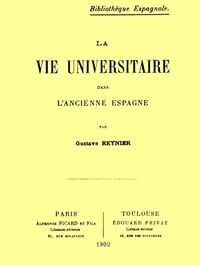
La Vie Universitaire dans l'Ancienne Espagne by Gustave Reynier
Gustave Reynier's book takes us on a tour of Spanish higher education from its medieval beginnings through the golden age of the Renaissance. Forget modern campuses; we're talking about universities housed in old palaces or church buildings, where your 'major' was theology, law, or medicine, and your professor might be a famous scholar debating ideas that could get him in trouble.
The Story
There isn't a single plot with characters, but there is a clear story being told: the birth and growth of a system. Reynier shows us how these institutions were founded, often by kings or popes wanting to boost their prestige. He then pulls back the curtain on daily life. We see how students lived (often in crowded, rowdy boarding houses), how they were taught (through long lectures and public debates), and how they played (with pranks, festivals, and sometimes violent clashes between different student groups). The real tension lies in the constant push-and-pull between the quest for knowledge and the very human, often chaotic, reality of bringing hundreds of young people together in one place.
Why You Should Read It
What makes this book special is how it connects the past to the present. Reading about 15th-century students complaining about bad food in the dining hall, forming tight-knit clubs based on their hometowns, or pulling elaborate pranks on new freshmen feels instantly recognizable. Reynier doesn't just list facts; he builds a vivid picture of a community. You get a real sense of the energy, the ambition, and the occasional absurdity of academic life in a completely different era. It shatters the stuffy image we might have of the past.
Final Verdict
This is a perfect read for anyone who loves social history or has ever been a student. It's for the person who enjoys books like Ian Mortimer's A Time Traveler's Guide to Medieval England—history that focuses on people's everyday experiences. You don't need a PhD to enjoy it; you just need a bit of curiosity about how people have always been people, no matter the century. If the thought of exploring the original 'uni life' sounds fun, this hidden gem is for you.
There are no legal restrictions on this material. You can copy, modify, and distribute it freely.
Thomas Moore
1 year agoAs a long-time follower of this subject matter, the clarity of the writing makes even the most dense sections readable. An excellent example of how quality digital books should be formatted.
Jessica Thomas
3 weeks agoThis work demonstrates a clear mastery of contemporary theories.
John Perez
1 year agoIt took me a while to process the complex ideas here, but the way it handles controversial points with balance is quite professional. A mandatory read for anyone in this industry.
James Hernandez
6 months agoWhile browsing through various academic sources, the breakdown of complex theories into digestible segments is masterfully done. Well worth the time invested in reading it.




Ashley Lopez
6 months agoThe clarity of the concluding remarks is very professional.