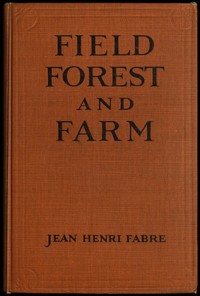
Field, Forest and Farm Things interesting to young nature-lovers, including some matters of moment to gardeners and fruit-growers — A Closer Reading
Edition facts
Field, Forest and Farm Things interesting to young nature-lovers, including some matters of moment to gardeners and fruit-growers — A Closer Reading can be approached with a clearer sense of reading commitment from its source measurements: 85,461 words, 6 hr 12 min estimated reading time, and 64 detected text sections.
The text analysis averages about 23.9 words per sentence, while the detected sections provide another way to judge how the source is divided.
Project Gutenberg metadata also associates the work with “Natural history,” connecting these edition facts with the source record’s subject description.
Calculated from edition completeness, EPUB availability, text structure and catalogue metadata. Not a user rating.
How this score is calculated
- Description quality20 pts
- Title & short description10 pts
- Source metadata20 pts
- Text length15 pts
- Chapters / structure15 pts
- EPUB file integrity20 pts
Total of 100 points, scaled to a 2.5-5.0 range. Editions with an empty description or a missing EPUB file are not scored.
Read the Text
nvince, not the nobleman who cared nothing for the potato except as a means for winning the king’s favor, but the peasant himself directly interested in this affair. It was necessary to overcome his repugnance, a repugnance that made him reject the potato even as fodder for cattle; he must be taught by his own experience that the tuber of ill repute, far from being a poison, is excellent food. All this Parmentier thoroughly understood and he set to work without delay.”
“This time he is sure to succeed.”
“Not at first and not without great pains. In the suburbs of Paris he bought or rented for farming large tracts of land which he caused to be planted with potatoes. The first year the harvest was sold at a very low price. A few people bought some.”
“Now we are nearing the goal.”
“Not yet. Good is not accomplished so easily. The second year the potatoes were given away for nothing. Nobody wanted them.”
“And Parmentier was left with the whole crop on his hands?”
“The excellent man could not find a welcome for a single basket of potatoes. In the country they laughed maliciously at his obstinacy in cultivating a vile root that no peasant would even feed to his pigs. But Parmentier did not despair. A singular idea came to him: to see whether the charm of forbidden fruit would not accomplish what he had failed to effect by his writings, his advice, his personal example, and his generous offers.
“A large field was planted with potatoes, and when the crop was ripe a fence was built about the field as if to protect a most valuable harvest. And more than this, Parmentier caused it to be trumpeted abroad throughout the neighboring villages that it was expressly forbidden to touch the potatoes under penalty of all the rigors of the law against marauders. During the day the guards kept strict watch over the field, and woe betide whoever should try to climb over the fence!”
“It seems to me,” said Emile, “that with all those prohibitions and guards and fences Parmentier was more likely than ever to have all his potatoes to himself.”
“Such was not his purpose; far from it. The guards kept good watch during the day, but they had orders to stay at home at night and leave unmolested any who might attempt to get into the field. ‘What, then, is this plant that is guarded with such jealous care?’ the peasants asked one another, attracted by the strictness of the prohibitory measures. ‘It must be very precious. Let us try to get some when the night is dark.’
“Some bold marauders climbed the fence, hastily pulled up a dozen tubers, and scampered off again, looking back to make sure they were not pursued. Not a guard was to be seen. Word soon spread that the field was not guarded at night. Then the pillage began in earnest: the tubers hitherto so despised were carried off by sackfuls. In a few days there was not a potato left in the ground.
“People came and told Parmentier of the devastation of his field. The worthy man wept for joy; the one robbed blessed his robbers. By his ruse he had endowed his country with an inestimable food-supply; for, once placed in the hands of those who would consent to cultivate it, the potato was valued at its true worth and spread rapidly.”
“Oh, what a curious story!” cried Louis, when Uncle Paul had finished; “what a curious story! Who would have thought it took all that trouble to make people accept a food that to-day is of such value to us? Is it, then, so very hard to spread a good idea when it is new?”
“Very hard indeed,” replied Uncle Paul, “as those well know who make it their mission to fight against prejudice and ignorance.”
“Now let us see how the plant is nourished by the various substances of which we have just studied the most important. Every form of plant-life is made up, not of a compact and uniform mass of matter with no occasional empty spaces, but, on the contrary, with the aid of a microscope it is seen that an infinite number of very minute cavities called cells are interspersed throughout the body of the plant. These cells may be regarded as extremely small closed sacs, sometimes round, sometimes oval, but more often with irregular and angular outlines by reason of the mutual pressure exerted by the cells. The cell-wall is composed of an excessively fine membrane. In the pith of the elder, all riddled like a sponge, you have an example of cells large enough to be seen without a microscope. Other cavities are long, pointed at both ends and swollen in the middle like a spindle. They are called fibers. Still others form canals of uniform size throughout, as fine as a hair and long enough to extend from the roots to the topmost leaves. These canals are called ducts. Look closely at the cross-section of a very dry vine-branch, and you will see a multitude of orifices into which it would be possible to thrust a hair. Those are the openings into so many broken ducts. Everything in the plant, absolutely everything—root, stalk, wood, bark, leaves, flowers, fruit, seeds, no matter what—is composed of a mass of cells, fibers, and ducts.
“That understood, let us consider the root of the plant. In its new parts, at the tip-ends of its finest ramifications, tip-ends that we have called spongioles, it is composed of cells just formed and consequently tender and fitted for absorbing easily the moisture in the soil. Spongioles, then, fill themselves much as sponges would do. That done, conduits offer their services for conveying the liquid to the top of the plant: they are the ducts just referred to, and comparable here to the water-pipes in our own fountains. But if in fountains water runs by its own weight, going from the highest to the lowest point, it is not so with the liquid absorbed by the roots, a liquid running from below upward. What then is the force that makes it ascend?
“This force is in the buds or, to speak more correctly, in the leaves. Each leaf is the seat of an active evaporation whose object is to rid the plant of the great quantity of water required for dissolving in the soil and then conveying to the leaves the nutritive substances present in the soil. This evaporation leaves a void in the cells that have given up the evaporated water. But this void is immediately filled from the neighboring cells, which give up their contents and receive in turn the contents of the next lower layers. From cell to cell, from fiber to fiber, from duct to duct, a similar transfer takes place at points farther and farther away from the evaporating surface, until the tip-ends of the rootlets are reached, where a continuous absorption makes good the loss of moisture by evaporation. The process reminds one somewhat of the working of our pumps, in which the piston leaves behind it a void that is immediately filled by the water in the pipe, which in its turn gets water from the bottom of the well. This liquid which ascends in every plant, absorbed by the spongioles of the rootlets and put in motion by the evaporation from the leaves, is called ascending sap, or crude sap. The sap is called ascending because it passes from below upward, from the roots to the branches; and it is called crude because it has not yet undergone the preparation that will turn it into the nutritive liquid of the plant. Thus we have learned our first lesson, namely: ascending sap is carried especially to those parts of the plant where buds are numerous, where leaves abound; it seeks by preference the ends of the branches, where evaporation is most active.
“We know that the surface wood is the newest; it is formed of cells, fibers, and ducts whose cavities are free and whose walls are permeable. The interior wood is older; its cells, fibers, and ducts are encrusted, stopped up, decrepit, out of use. The liquid accordingly makes its way where circulation is possible, and ceases to flow where the passage is obstructed. That is to say, the ascent of the sap takes place through the sap-wood and chiefly through the outermost layers, or those of most recent formation. Repeated experiment leaves no doubt on this point. When a tree is cut down at the time of the sap’s greatest activity, we find the sap-wood moist and the older wood perfectly dry. Finally, in herbaceous plants the sap ascends through the whole body of the stem. Suspended during the winter on account of the absence of foliage, this ascent of the sap becomes remarkably brisk at the awakening of vegetation. Then it is that fruit-trees shed tears, so to speak, where the pruning-hook has left its mark; or, in other words, the ascending sap oozes from the openings of the severed ducts. These tears are especially noticeable in the grape-vine, where it has recently been trimmed.
“Now what would you expect to find in this liquid if you collected some of it as it trickles in the form of tears either from the vine or from a fruit-tree? Many things, doubtless, you will say, since this precious liquid is the prime source of all that the plant contains in itself. If such is your thought, undeceive yourselves: ascending sap is little more than clear water, and often it is very difficult for science to prove beyond a doubt the presence in it of various substances in solution, so minute a fraction of the whole do they compose. Among these substances the most frequent are compounds of potash, of lime, of carbonic acid gas, traces of phosphates, and compounds of nitrogen or ammonia. In short, the liquid from which the plant is to derive its nourishment is the weakest sort of broth, composed of an enormous quantity of water and a very small proportion of dissolved substances. These inconsiderable substances are the only or almost the only things utilized by the plant; and the water that has collected them in filtering through the soil, and has then carried them from the roots to the leaves through the sap-wood, the water that forms almost the whole of the ascending sap, is destined, as soon as the journey is accomplished, to leave the plant and return as vapor to the atmosphere whence it descended in the form of rain.”
“Ascending sap, a liquid composed of a large quantity of water and a very small proportion of dissolved nutritive substances, is absorbed in the ground by the roots and carried to the leaves through the sap-wood. It is not yet a nutritive fluid for the plant; it becomes so in the foliage by a double process. First, on being distributed to the leaves, which furnish a vast surface for evaporation, it exhales its superabundant water in the form of vapor and thus concentrates its usable ingredients. Then, under the influence of the sun’s rays and through the medium of the green matter contained in the leaves, it undergoes modifications that work a fundamental change in its character. Among the processes here taking place, one of the best known is the decomposition of the carbonic acid gas taken from the air by the leaves and from the soil by the roots.
“We have seen that this gas, the plant’s chief source of nourishment, is composed of carbon combined with the breathable part of the air, or oxygen. Under the action of the sun’s light the leaves decompose this gas, liberating the oxygen in a condition henceforth fit for the respiration of animals and for combustion, while the carbon remains in the plant, mixes with the substances brought by the ascending sap, and with them becomes the nourishing liquid, the descending or elaborated sap, from which all future parts of the plant are to be formed. This liquid cannot be called wood, bark, leaf, flower, or fruit; it is not at all like any of these, and yet it is essentially a little of them all. An animal’s blood is neither flesh, bone, nor fleece; but bone, flesh, and fleece are of its substance. Likewise the elaborated sap is a liquid designed for the sustenance of all parts of the plant; it contains matter for fruit and wood, leaves and flowers, bark and buds. It is the plant’s blood; everything in the plant gets from it its nourishment, its wherewithal to develop. What a wonderful, what an incomprehensible process its production appears to us! In the crowded ranks of the leaf-cells, where one would suppose everything to be at rest, what activity, what transformations beyond the reach of human science! Liquids swell the cells, ooze from one to another, transpire, infiltrate, circulate, exchange their dissolved substances; vapors are exhaled, gases come, others go; the sun’s light separates what was united, unites what was separated, and the raw materials of the ascending sap combine henceforth with the materials of life.
“The elaborated sap descends from the leaves to the twigs, from the twigs to the branches, from the branches to the stalk or trunk, and from the latter to the root, distributing itself here and there on its way. It circulates between the wood and the bark. It is this sap that, in the spring, when it is in great abundance, forms between the wood and the bark a thin layer of slightly viscous moisture and makes the bark easy to peel from its branch. Which of you in the month of May has not taken advantage of this peculiarity to peel off all in one piece a tube of bark from a very smooth twig of willow or lilac in order to make a whistle, trumpet, or other noisy plaything, the delight of boys of your age?
“Nothing is easier than to prove the passage of sap from above downward. If you remove from a tree-trunk an annular band of bark, the nourishing liquid oozes and accumulates at the upper edge of the wound, but nothing of the sort takes place at the lower edge. Arrested thus by a break in its path, the sap accumulates above the uncovered ring and causes there an abundant growth of wood and bark, which piles up in the form of a thick circular swelling, while below the ring the trunk preserves its former size.
“A tight ligature, by compressing and obstructing the passages through which the nutritive fluid has to pass, causes the formation of a similar swelling above the line of stoppage. You may have seen a sapling, bound too tightly to the stake intended for its support, strangled by its own growth if the gardener has forgotten to loose the band in time. Little by little the trunk swells above this band, which is finally overgrown by the bark and even hidden within its substance. Indeed, it is not rare to find a tree with its trunk caught fast in a narrow passage, as for example in the crevice of a rock, and swollen above the obstacle into an unsightly excrescence. The stoppage of the sap in its downward course explains this phenomenon.
“If the tree-trunk is not completely encircled by the stricture, if somewhere there is a strip of bark left free to serve as a passage, the nourishing juice takes this way to get around the obstacle, and so pursues its course to the roots. Then the tree continues to live. But if the barrier is absolutely insuperable, as in the case of an unyielding ligature or when the tree has been girdled, the sap cannot descend to the roots to nourish them; and with the death of these the end of the tree is not far distant.
“An important lesson remains to be drawn from these details concerning the circulation of this nutritive liquid in plants. Henceforth, when we fasten a plant to its prop or supporting stake, we shall be careful not to tie the string too tight or else to loosen it at the proper time, since otherwise we should run the risk of strangling the plant and so causing its death.”
“Self-preservation is the first law of a tree’s life, and next to that the preservation of its species, which is to be perpetuated by means of seeds. All this is perfectly natural, for no posterity would be possible to the tree unless its own existence were maintained in the first place. Accordingly the tree lives first for itself, accomplishing this object by covering itself with buds that develop into branches covered with leaves. It is indeed on the leaves that the fundamental principles of the plant’s life are based; it is in their substance that, with the sun’s help, the descending sap is elaborated, this sap being the nutritive fluid, the life-blood as it were, of the vegetable organism. The propagation of the species comes next in importance. This duty devolves on the flower-buds or those that blossom and produce fruit, in the center of which are the seeds.
“Thus, left to its own impulses, a tree, if vigorous and enjoying favorable conditions, at first uses all its sap in making buds for the increase of its own woody structure; it covers itself with stout branches and abundant foliage before making up its mind to blossom. Later, when its limbs are strong and the ardor of growth begins to abate, the flower-buds appear, but usually in small numbers because a prodigal production of fruit causes rapid decline. Copious blossoming comes only toward the latter part of life; a tree never blossoms better than when it is about to die, as if, foreseeing its end, it strove before succumbing to leave behind it a numerous progeny. A thriving tree blossoms little or not at all; a sickly tree makes haste to blossom. But it is to man’s interest that a tree should blossom and bear fruit as early and as abundantly as possible; we demand from it not the branches it would give us without our intervention, but baskets of fruit induced by our care. From this struggle between the natural tendencies of the tree and our own needs has sprung the practice of pruning, or the art of manipulating fruit-trees so as to obtain from them an abundant harvest.
“Here let us examine the general principles that are to guide us in the practice of this art. The shape to be given the tree’s superstructure of branches and foliage is the first question we must consider. This shape is far from being unimportant; it is, on the contrary, very important, since the circulation of the sap and the distribution of the sun’s rays, essential conditions to plant-life, are strictly dependent on it. If the tree is left free to develop by itself and to take its natural form, the sap from the roots will, under the impetus of its ascent, always seek by preference the highest points, where growth will in consequence proceed with vigor, while the lower parts will languish and die out for want of sufficient nourishment. If the branches are not properly thinned the central ones, deprived of the sun’s vivifying rays, will remain poor, puny, more or less blanched. On the other hand, the tree ought to fill, as far as possible, the place assigned it, in order that there may be no unproductive space.
Jean-Henri Fabre's Field, Forest and Farm, translated by Florence Constable Bicknell, opens with Uncle Paul addressing his nephews during 'pleasant summer afternoons.' The framing device is a walk-and-talk, but the prose quickly settles into a methodical, lecture-like rhythm. Fabre's authorial choices are evident from the first chapter: he treats bread-making as a marvel of mechanical ingenuity, describing the millstone's work with a blend of wonder and technical precision. The voice is patient, explanatory, and occasionally exclamatory—'What an interesting mechanism that is!'—yet never condescending. This balance between enthusiasm and instruction characterizes the entire work.
Diction and the Instructional Voice
Fabre's diction is consistently concrete and sensory, favoring verbs of action and tangible nouns. In the excerpt on slipping, he writes of 'vertical holes made with a long iron or wooden dibble' and 'fine earth sifted into the hole and well rammed down.' The language is that of a practitioner, not a theorist. He uses precise measurements—'about half a meter,' 'five centimeters long'—and technical terms like 'bourrelet' (swelling) without always glossing them immediately. The translator, Bicknell, preserves this specificity, rendering French agricultural terms into English equivalents that retain their exactness. Fabre's sentences are often long and cumulative, building a sequence of actions: 'After being prepared in this manner the slips are set out. In soil that has been well worked... vertical holes are made...' This structure mirrors the step-by-step nature of the tasks he describes.
Dialogue as a Pedagogical Device
Though the excerpts contain little direct dialogue, the framing narrative implies a conversational setting. Uncle Paul 'began' his talks, and the nephews are 'willing companions and eager listeners.' Fabre uses this setup to justify explanatory monologues. The dialogue is implied rather than quoted; the reader is positioned as one of the listeners. This choice allows Fabre to maintain a direct, second-person address at times—'Take hold of a small branch and pull it down'—creating an imperative tone that invites participation. The absence of the nephews' questions or interruptions keeps the focus on the information. Fabre's pedagogical method is thus one of demonstration and command, not Socratic exchange.
Descriptive Precision in Practical Processes
Fabre's descriptions are notable for their attention to cause and effect. In the passage on ring-shaped swellings, he explains that 'the slight wounds inflicted by this scraping... favor the starting of roots by arresting the sap.' He does not merely state what to do; he explains why it works. This causal reasoning extends to his treatment of plant physiology: 'the descending sap will be stopped in its course at this point, will accumulate, and will foster the growth of adventitious roots.' The description of splitting a branch to create a 'spur or splinter from the trunk' is vivid and tactile. Fabre's prose often includes a small narrative of the plant's response, as when he notes that 'by autumn a swelling will have formed.' This technique turns horticultural practice into a kind of natural drama.
Structure and the Cumulative Lesson
The book's structure is evident from the table of contents: sixty-two chapters, many with continuations, moving from soil chemistry to insect life to bird migration. The excerpt on slipping is part of a sequence on propagation (chapters 34–39). Fabre builds knowledge incrementally, often referring back to earlier concepts. In the slipping chapter, he mentions 'the process of layering' and 'the ring-shaped swelling' as already familiar. This cumulative approach is a deliberate authorial choice, creating a textbook-like progression. The chapters are short, typically five to eight pages, allowing each topic to be digested before moving on. Fabre's voice remains consistent throughout: curious, methodical, and grounded in observable phenomena. The result is a work that teaches not just facts but a way of seeing the natural world.
Readers approaching Field, Forest and Farm should expect a patient, detailed exposition rather than a narrative. Fabre's authority comes from his own observation and practice, not from citation of other sources. The book rewards those who read it with attention to the physical processes he describes. Bicknell's translation preserves the clarity and directness of Fabre's French, making the work accessible to English-speaking readers interested in the practical and scientific underpinnings of agriculture and natural history.
The rain kept rhythm with Fabre’s measured sentences, each word placed like a seed in damp soil. That patient attention to craft reminded me of another old volume, dusty and unassuming, about growing things in small spaces—The Book of Town & Window Gardening — Edition Insights. Both books share that unhurried belief that observation, not urgency, is how things truly take root.

Luke Lopez
2 weeks agoWilliam Smith
1 month agoCarter Robinson
3 weeks agoMila Lewis
3 weeks ago-
Sheila Marshall - 1 month ago
A charming classic that offers a wealth of facts about the natural world. It's clearly written more for an earlier era, so some information feels dated, but the core enthusiasm for nature is infectious. The farm and garden tips are quite practical, though young readers today might find the language a bit formal. Still, it's a great resource for parents and educators looking to spark curiosity. -
Cindy Katelyn Campbell - 3 weeks ago
This book is a treasure trove for young nature enthusiasts! The author brilliantly connects the dots between fields, forests, and farms, making it both educational and engaging. The sections on gardening and fruit growing are particularly practical, offering timeless advice that still holds up. My kids and I have spent hours exploring the outdoors with this as our guide. It's a must-read for any family wanting to cultivate a deeper love for nature. -
Ashley Katelyn Williams - 2 weeks ago
While the title promises interesting things for young nature lovers, the execution falls short. The writing is dry and overly technical for its intended audience, and the organization is haphazard. Many sections assume a level of knowledge that most children won't have, and the lack of illustrations makes it hard to engage with. A more streamlined, visually appealing approach would be needed to truly capture young readers' attention.
How will you remember this book?
Save your reaction, strongest insight, and memorable passage.
Carter Green
1 month ago