About 206 minutes
Dutch Bulbs and Gardens — Edition Insights
Gardening
47,217 recorded words. 1 minutes difference from this book's estimate.
View Gutenberg source #48678
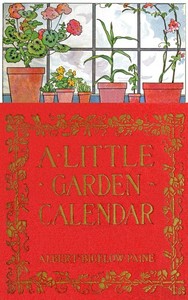
Before opening A Little Garden Calendar for Boys and Girls — Themes and Context, the edition data offers a quick orientation: 47,383 words, 3 hr 27 min estimated reading time, and 13 detected text sections.
The text analysis averages about 19.6 words per sentence, while the detected sections provide another way to judge how the source is divided.
Project Gutenberg metadata also associates the work with “Vegetable gardening,” connecting these edition facts with the source record’s subject description.
Explore this collection
These alternatives are selected using recorded categories and estimated reading time.
About 206 minutes
Gardening
47,217 recorded words. 1 minutes difference from this book's estimate.
View Gutenberg source #48678About 203 minutes
Gardening
46,472 recorded words. 4 minutes difference from this book's estimate.
View Gutenberg source #67874About 198 minutes
Gardening
45,447 recorded words. 9 minutes difference from this book's estimate.
View Gutenberg source #18189Search stored excerpts and compare books → Choose by your preferences →
Choices use stored catalog measurements. Estimates vary with reading speed. A shared category is a catalog label, not a claim that two books have the same argument or literary quality.
Search reads excerpt text stored with this catalog and links to its associated Gutenberg record. The connection is stored in the site database; this tool does not recheck that every excerpt is word-for-word identical to that external record. Excerpt search does not cover every chapter and does not verify historical publication dates.
Catalog snapshot checked: 2026-09-25. Coverage: 91 public books, 91 available source excerpts.
Read the complete public-domain text at its original source.
Read on Project GutenbergAlbert Bigelow Paine's A Little Garden Calendar for Boys and Girls (1905) is structured as a monthly guide to planting, tending, and harvesting, but its excerpts reveal a book equally concerned with botanical explanation and narrative. The author frames the work around Dr. S. P. Langley's motto, 'Knowledge begins in wonder,' and aims to present 'the fairy stories of nature' alongside practical instruction. The text introduces two child characters, Davy and Prue, who learn from a 'Chief Gardener'—a device that allows Paine to weave scientific information into dialogue and demonstration.
The excerpts show Paine using conversation between the Chief Gardener and the children to explain plant reproduction. In one passage, the Gardener pulls apart a bramble rose to show stamens and pistil, describing how pollen falls on the stigma and is 'drawn down through the style to give life to the seed-pod.' He then explains artificial pollination: gardeners 'take a rose of one kind and color and shake it gently over a rose of another kind and color' or use a 'tiny soft brush' to transfer pollen. Davy and Prue respond with enthusiasm—Prue asks to create new roses, and Davy announces he is 'trying for a new kind of peach.' The Gardener's replies are encouraging but realistic: he warns Prue that open-air roses may not yield success, and he jokingly names her hypothetical rose 'the Princess Prue.' This interplay of accurate botany and childlike ambition is a recurring pattern.
Paine does not pretend that science has all answers. When Davy asks where tastes like sweet, sour, and pepper come from—noting that 'the air and the water don't taste'—the Chief Gardener admits, 'the sun is the only one who could answer your question. It is a chemistry which no one of this world has been able to explain.' He calls the sun 'the greatest of all chemists' and leads the children into the garden to observe its work. This moment acknowledges the limits of contemporary knowledge while directing attention to observable phenomena. The book thus balances instruction with wonder, presenting plant growth as partly mysterious. The excerpt does not reveal whether this philosophical thread continues throughout the calendar, but it establishes a tone of humility before nature's complexity.
The Project Gutenberg record categorizes the book under 'Vegetable gardening' and 'Gardening -- Juvenile literature,' but the excerpts show a broader scope. Paine includes flower gardening (roses, morning-glories, dianthus pinks) and devotes significant space to botanical theory, not just practical tasks. The 'Word to Teachers and Parents' explicitly states the book aims to teach 'the really human instincts and habits of certain plants' and 'the struggle for existence of all.' The narrative also incorporates 'traditions, fairy tales, and the like' to 'illuminate fact with fancy.' Thus the catalog subjects, while accurate, underrepresent the book's blend of science, story, and philosophy. Readers expecting a straightforward how-to guide will find a more literary and discursive work, one that uses a fictional frame to deliver its lessons.
Readers approaching A Little Garden Calendar should expect a hybrid text: part practical almanac, part botany primer, and part children's story. The excerpts suggest that Paine's method is to embed scientific facts within a narrative of discovery, using the characters' curiosity as a vehicle. The monthly structure likely provides a backbone, but the book's value may lie in its patient explanations and its willingness to acknowledge the limits of human knowledge. Those interested in early twentieth-century children's nonfiction or in the history of science education will find this a distinctive example of the genre.
There’s something gentle about that old Garden Calendar, how it trusted children with real science, told through Davy and Prue’s wondering eyes. It makes me think of another quiet volume, one that treats soil and season as a kind of patient conversation — Notes on agriculture in Cyprus and its products — Inside the Classic. Both feel like letters from a slower world, where growing things was still a kind of intimacy.
Build a private reading journal entry for this title.