
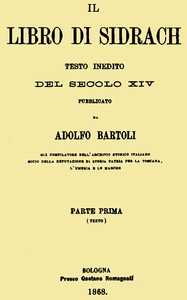
Il libro di Sidrach: testo inedito del secolo XIV by active 13th century Sidrac
This book is something special. It's not a story with a plot in the usual sense. Instead, it's a preserved moment of medieval curiosity. The whole thing is structured as a long dialogue where King Boctus of Bactria poses questions to a philosopher named Sidrac. The king's questions cover absolutely everything he could think of.
The Story
There's no traditional narrative here. The "story" is the journey of questioning itself. King Boctus asks, and Sidrac answers. The topics jump from astronomy (why do stars shine?) to theology (where is heaven?), from practical advice to deep moral philosophy. It's like reading the transcript of the longest, most ambitious Q&A session in history. The tension comes from seeing which of Sidrac's answers feel timeless and which ones show just how much our understanding of the world has changed.
Why You Should Read It
I loved this book because it's humbling and human. Reading it, you realize that people 700 years ago wrestled with many of the same big questions we do today—about justice, love, death, and our place in the universe. Their answers are just wrapped in a different worldview. One minute Sidrac is explaining why you shouldn't gossip, and the next he's describing the nature of angels. It's a reminder that the drive to explain and understand is a constant thread through human history.
Final Verdict
This is not a casual beach read. It's perfect for history buffs, philosophy dabblers, and anyone with a deep curiosity about intellectual history. If you enjoyed books like The Name of the Rose for its immersion in medieval thought, or if you simply like the idea of peeking over the shoulder of a 14th-century scholar, you'll find this incredibly rewarding. Think of it as a conversation with the past.
Legal analysis indicates this work is in the public domain. Access is open to everyone around the world.
David White
1 year agoHaving read the author's previous works, the logic behind each conclusion is easy to follow and verify. It’s hard to find this much value in a single source these days.
Sarah Perez
1 year agoAmazing book.
Carol Rodriguez
4 months agoUsed this for my thesis, incredibly useful.
Ashley Smith
11 months agoGreat reference material for my coursework.

Patricia Davis
7 months agoUnlike many other resources I've purchased before, the bibliography and references suggest a high level of research and authority. Simple, effective, and authoritative – what else could you ask for?